Brain injury caused by infections
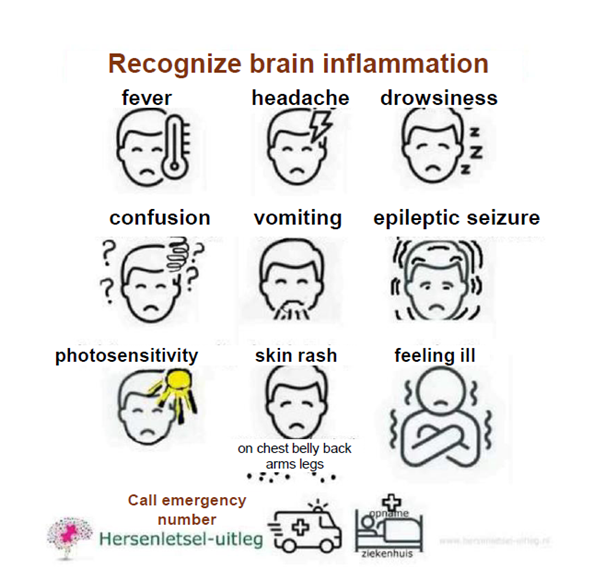
Infections may occur in our brain like in other parts of the body. An infection in the brain is called a cerebral infection.
Examples of a cerebral infection:
- Inflammation of the brain (encephalitis)
- Inflammation of the meninges that cover the brain and spinal cord (meningitis)
- Mixed picture both inflammation of brain tissue as well as meninges (meningoencephalitis)
- Brain abscess
- Sepsis - blood poisoning
- HIV may cause inflammation in the brain; see encephalitis
- Viral encephalopathy; impaired brain function due to a rare complication of influenza and other viral infections. This includes the coronavirus, among others. It is also known as acute necrotizing encephalopathy. Necrotizing means that brain cells die.
- COVID-19
- ADEM Acute Demyelinating EncephaloMyelitis
- Neurological abnormalities following a Legionella infection (Legionella pneumophila)
- PAIS post-acute infection syndrome
- Neurosarcoidosis
- Creutzfeldt-Jakob disease (CJD)
- Lyme disease
- ME Myalgic encephalomyelitis (external link)
- Q fever
PAIS
PAIS is an abbreviation for 'Post-Acute Infection Syndromes', a collective term for long-term symptoms following an infection, such as COVID-19 (Corona), Long Covid or Post-Covid, Legionella, ME / CFS, Sepsis, tick bites with Lyme disease and Q fever, among others.
Diseases that we have all included on this website about brain injury, because the impact on the brain may be long-lasting and significant.
PAIS has received increasing attention, particularly following the COVID-19 pandemic. Many people experience symptoms that persist for weeks or even months, such as fatigue, respiratory problems, and cognitive impairment. This affects not only the patients' quality of life but also their daily activities and work.
The impact of PAIS is significant. Patients may struggle to perform simple tasks, leading to frustration and a sense of isolation.
Research into PAIS is still ongoing, as it is clear that this condition must be taken seriously.
The Dutch PAIS Alliance is a partnership of patient organizations, founded in 2023, with the aim of forming a strong, unified voice.
They advocate for careful diagnostics and thorough research that clarifies exactly what someone is suffering and for care and treatments that align with the unique needs of each person.
In addition, they actively work to promote scientific research.
More information:
- https://www.amsterdamumc.org/en/research/institutes/amsterdam-institute-for-immunology-and-infectious-diseases/news/pais-research-challenges-and-developments-in-pais-research-with-jeroen-den-dunnen
- https://www.amsterdamumc.org/en/research/institutes/amsterdam-institute-for-immunology-and-infectious-diseases/news/pais-impact-the-dutch-lyme-disease-expertise-center-from-research-to-real-world-impact
- https://pmc.ncbi.nlm.nih.gov/articles/PMC10432703/
- https://islc-pais.org/
When the brain swells by an infection
The brain is protected inside the hard shell, the skull. When the brain begin to swell, the skull keeps the swelling down causing the swollen brain to press in a different direction.
This allows the brain to put pressure on the brain stem. From this section of the brain vital functions such as breathing and heart rate are controlled.
This part of the brain regulates vital functions such as breathing and heart rate.
If this situation is left untreated, the intracranial pressure increases and the brain may stop functioning and the patient will die.
Read extensive information about various conditions on this website in the separate chapters:
The meningococcal bacterium is on the rise.
This bacterium can enter the body and sometimes causes meningitis (neck stiffness) or sepsis.
This can progress very quickly and dramatically, with high fever, neck stiffness, or pain in the case of meningitis, or severe bleeding in the case of sepsis.
People may sustain brain damage or eye abnormalities, deafness, and/or epilepsy.
Sometimes, amputation of a leg or arm is necessary after severe sepsis.
5 to 10% of people with meningitis die. More people die from sepsis caused by the meningococcal bacterium. See sepsis.
advertisements are not ours
Resources
Hersenletsel-uitleg neurologisch team. Nederlandse vereniging voor neurologie, hersenstichting, J.B.M. Kuks, J.W. Snoek, H.J.G.H. Oosterhuis. Klinische Neurologie 15e druk, Bohn Stafleu Van Loghum, Houten, 2003 en Hersenletsel-uitleg.nl CBO richtlijn lyme borreliose, Validation of a clinical prediction rule to distinguish Lyme meningitis from aseptic meningitis. kinderneurologie.eu bronnen neuropsychologische gevolgen a bactriële meningitis Neuropraxis Vaessen Nederlandse Meningitis Stichting