Nerve cells and neurotransmitters
Before we explain signaling substances or neurotransmitters, we must explain where they are used in the body. Signaling substances or neurotransmitters are used by nerve cells and brain cells.
A brain cell is also a nerve cell, so for convenience we only use the name 'nerve cell' on this page. The Latin name for nerve cell is neuron. There are as many as 125 billion neurons.
Nerve cell structure
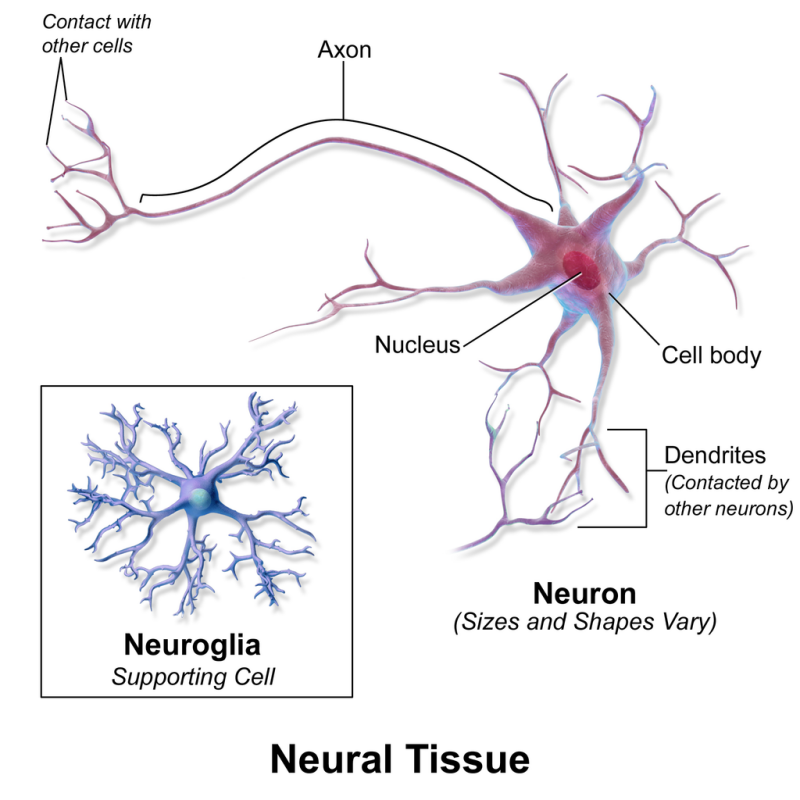
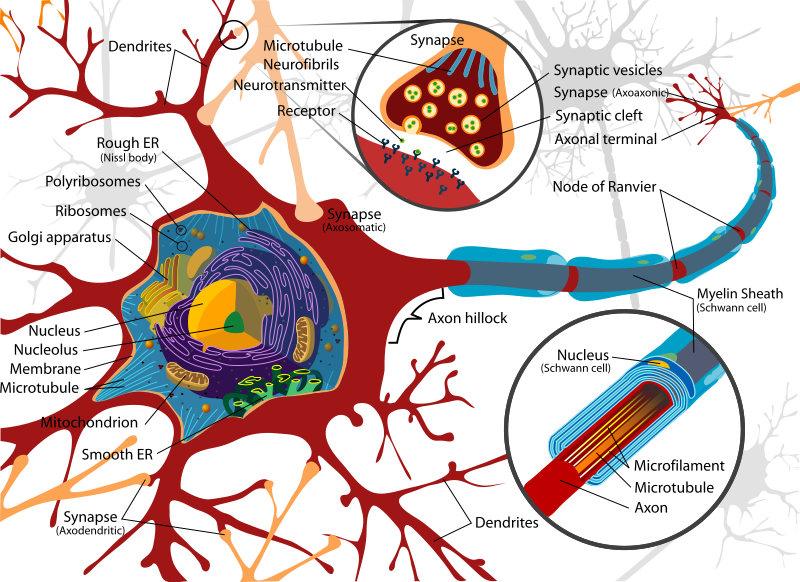
Cell body with a cell nucleus and extensions:
Most neurons consist of:
- a cell body (soma) with a cell nucleus (nucleus)
- a long extension, the axon.
- several small extensions, the dendrites.
Neurites
The collective name for axon and dendrite is 'neurite'.
Axon
Each nerve cell (neuron) has only one axon. It can be compared to a long electricity cable with many end branches.
The axon transmits information as electrical signals (action potentials) from the cell body to other brain cells and to the spinal cord (the central nervous system).
Dendrites
Every nerve cell (neuron) has several dendrites, the extensions of the cell body itself. Dendrite literally means "tree". A dendrite receives information from the body, tissues and from the senses (the peripheral nervous system).
Synapses
The dendrites make contact with the ends of the axons. The synapses are the connection points where the axons and dendrites come together.
Different types of nerve cells
Sensory nerve cells (neurons) send a signal to the central nervous system (brain and spinal cord).
Interneurons send a signal to another nerve cell (neuron) within the central nervous system (brain and spinal cord).
Motoneurons send a signal to muscles and glands.
Gray cells and white matter
The gray matter forms the cortex of the cerebrum (cortex cerebri) and of the cerebellum (cortex cerebelli). The cerebral cortex is really a thin layer of two to six millimeters thick.
Below this lies the white matter with the extensions of the neurons. The fatty protective layer of myelin around the axons gives the white color to the white matter.
Gray matter - receiving information
The function of the gray matter in the brain is to process information.
The gray-brown color is due to the mixture of blood vessels and cell nuclei/nerve cell bodies. It contains:
- dendrites
- short axons
- cell nucleus/cell-body neurons
- supporting cells (glia cells)
White matter - mutual communication
The function of the white matter in the brain is to ensure communication between nerve cells.
The white color is due to the myelin, the fatty covering that ensures electrical conduction. The axon, the long extension of a brain cell, transmits information via action potentials to other brain cells and the spinal cord (the central nervous system).
White matter is composed of:
- long, myelinated extensions of the brain cells; the axons (myelinated with a fatty layer of insulating material)
- astroglia, which are supporting star-shaped support cells. Glia originally means 'neural glue'
- blood vessels
- extracellular matrix,
biological tissue outside the cells that provides support and structure and consists of:
- collagen, elastin, fibrillin, proteoglycans and glycoproteins
- collagen, elastin, fibrillin, proteoglycans and glycoproteins
- myelin sheath, myelin consists of:
- lipids (fatty substance)
- the proteins MBP (myelin basic protein) and PLP (myelin proteolipid protein)
- lipids (fatty substance)
- oligodendrocytes, also a type of glial cell (support cell), which builds the myelin with its many long branches, see image below
- water
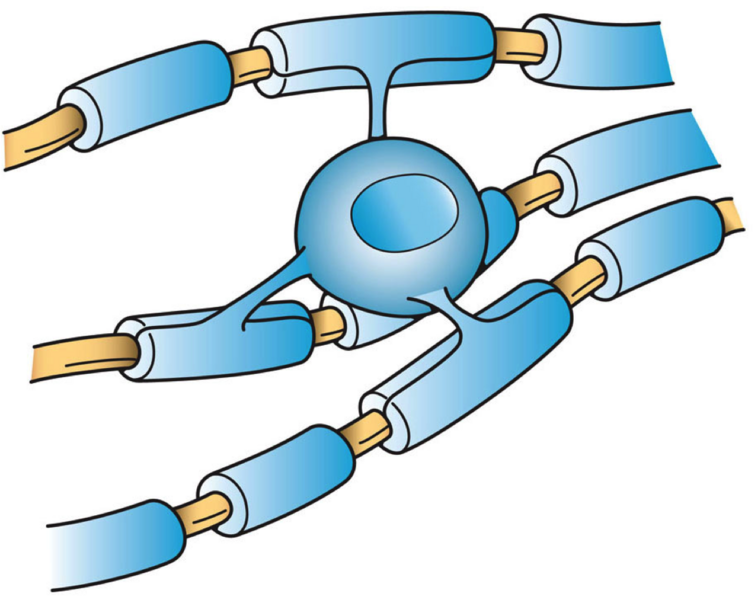
oligodendrocyte
White matter diseases
We have a specific page about white matter abnormalities (WMA)
and diseases and damage in the white matter.
Brain injury fact 1
With brain injury, damage may have occurred in all these parts. An axon, for example, may have been torn off. Brain cells can then no longer communicate with each other or can no longer communicate with muscles and glands.
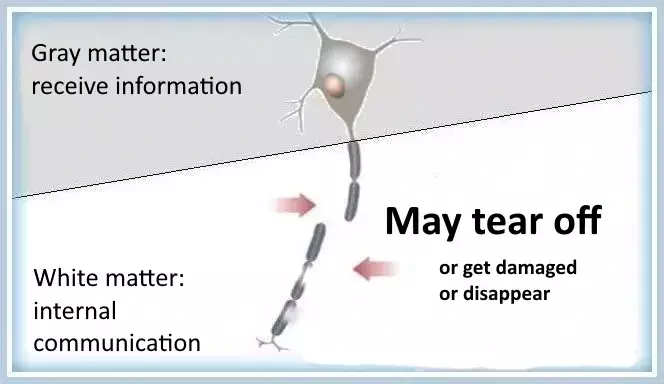
If a cell body is damaged, the entire neuron may die.
The nervous system
The peripheral nervous system
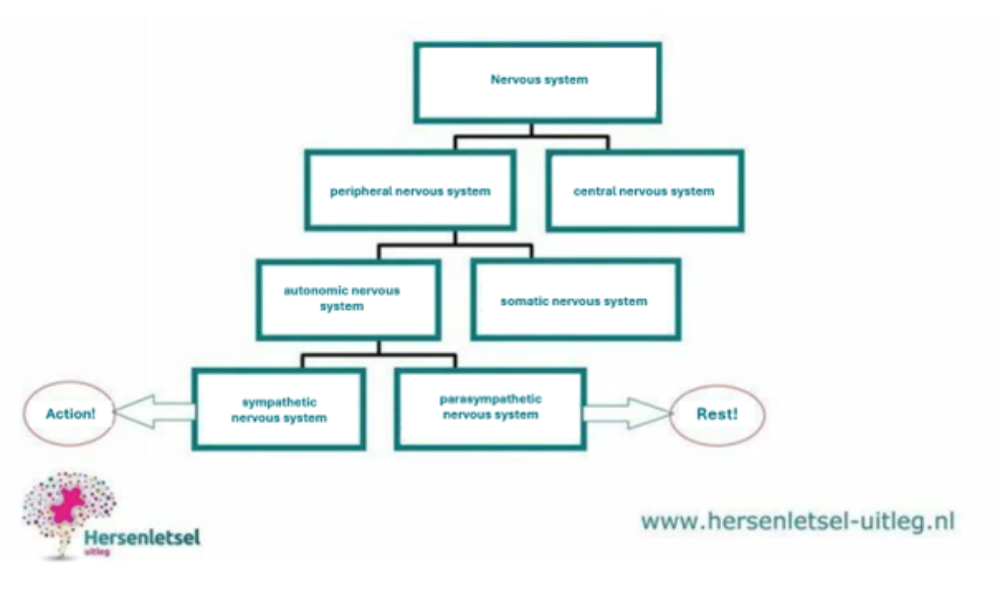
The peripheral nervous system contains the nerves that run from the brain and spinal cord to other tissues in the body and vice versa.
The peripheral nervous system ensures that:
- signals from your body and senses reach your brain.
- signals from your brain reach your muscles and organs.
The peripheral nervous system has:
- sensory nerves to transmit sensory information to the brain. (pain, heat, cold, and position information)
- motor nerves to transmit information to the muscles.
The autonomic nervous system
The autonomic nervous system is also called the vegetative nervous system. It regulates all automatic functions in the body such as blood pressure, heart rate, breathing and digestion.
Strictly speaking, the autonomic nervous system is part of the peripheral nervous system.
The autonomic nervous system is divided into:
- sympathetic nerves
- parasympathetic nerves
See our special page about the nervous system.
Signaling substances - neurotransmitters
Neurotransmitters are the signaling substances that transmit nerve impulses between nerve cells (neurons) and/or gland cells and muscle cells. You could call them messengers consisting of a chemical substance. Every message starts with an electrical signal.
Each nerve cell has a certain electrical charge that is fired when a specific limit is reached. The neurotransmitters are released.
Neurotransmitters are made in the ends (synapse) of a nerve cell and transported towards the cell membrane of the cell extension, the axon. Some of the neurotransmitters are always ready to be secreted and some are stored in small 'pouches' until they can be used.

Nerve cells communicate with each other through a process that is structured in a step-by-step plan. It can be compared to putting the right key in a lock. Only the key that fits (the right neurotransmitter) opens the door to action.
Prepare for transmitting:
1) An electrical signal is made in a transmitting (pre-synaptic) nerve cell.
2) The signal is transmitted over long distances.
Send:
3) Chemical signals (neurotransmitters) are released from the synapse.
4) The neurotransmitters spread through the synaptic cleft. That is the space between two nerve cells.
Receive:
5) The receiving nerve cell is the post-synaptic nerve cell. That is where the neurotransmitters come in.
6) An interaction is initiated with the receptors in the membrane of this nerve cell.
7) start of a number of processes at molecular level.
8) the "message" is converted into an electrical signal.
Prepare for new action:
9) The receptors release the neurotransmitters. These neurotransmitters can then be broken down or reused in the sending (presynaptic) nerve cell.
Support cells (glial cells) and nerve cells work together to prevent too much accumulation of potassium (K+) and neurotransmitters. They aim to maintain a balance. These glial cells are important, among other things, for communication between brain cells.
During sleep, the glial cells shrink slightly, allowing fluid to flow and waste products to be removed. The brain is thus washed clean of waste products.
In the event of an accident to the head, neurotransmitters can be released on the outside of the nerve cells. They are toxic to the nerve cells and therefore it often happens that some brain cells die in the first 24 hours after a head trauma.
Axons can break during traumatic brain injury. This is not always visible on a CT scan or MRI scan. That is usually the case diffuse injury (spread over the head). Read more about this on our Dutch page on explaining brain scans.
Inhibitory and activating neurotransmitters
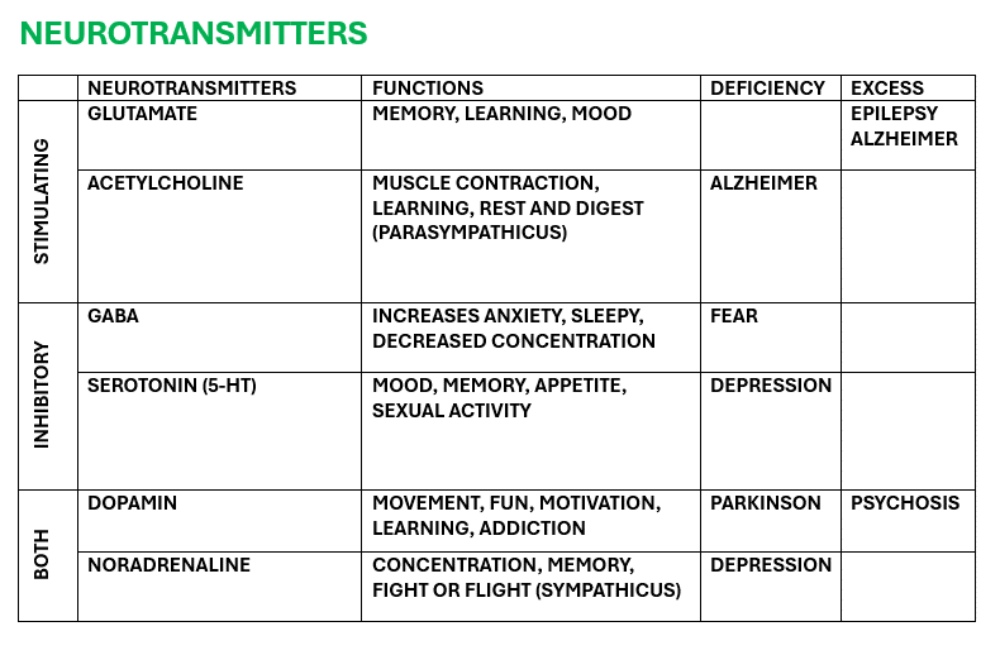
There are neurotransmitters that stimulate or inhibit the activity of another nerve cell. There are also neurotransmitters that can do both: inhibit as well as stimulate or excite.
These include, for example, dopamine and noradrenaline. The most important stimulating neurotransmitter is glutamate. The most important inhibitor is GABA.
Neurotransmitters in alphabetical order
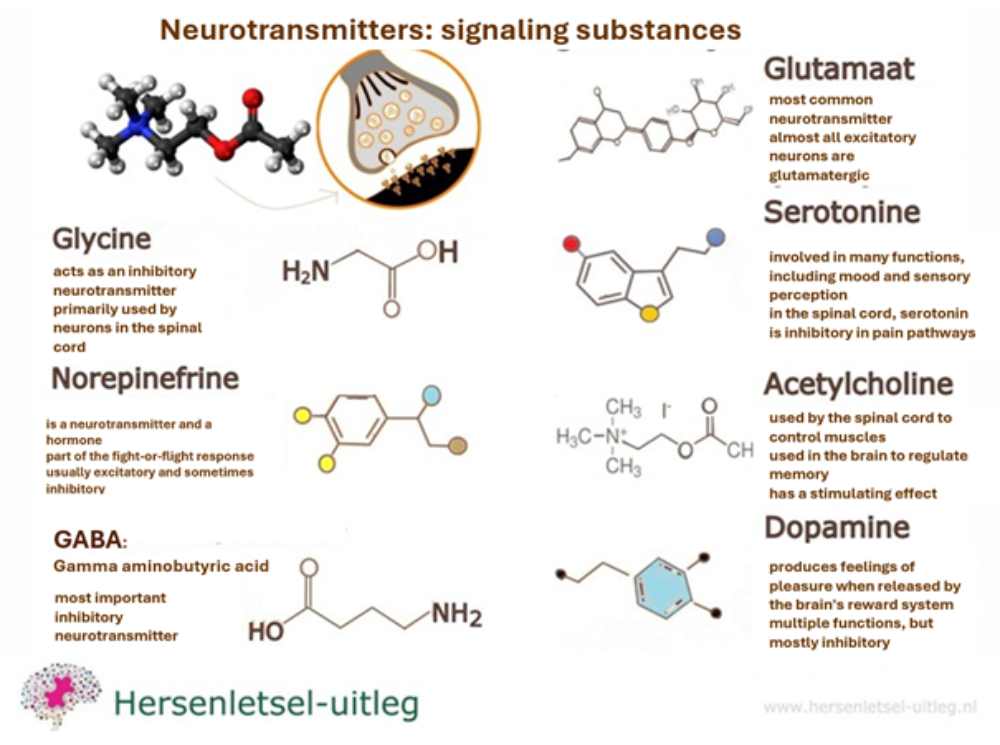
Acetylcholine
Acetylcholine plays an important role in the body. It is used by the spinal cord to control muscles. It is used in the brain for memory and attention regulation. As a stimulating neurotransmitter, it promotes communication between nerve cells. It is also the neurotransmitter of the parasympathetic nervous system, which ensures relaxation and recovery of the body. This chemical is essential for the functioning of both the central and peripheral nervous systems.
In short: Muscle movements, cognitive functions, regulation of the autonomic nervous system (such as heart rate, digestion, and breathing), slowing of the heart rate, and promoting a healthy sleep cycle.
Dopamine
Dopamine is an important neurotransmitter and is, for example, necessary for proper muscle control. Dopamine provides a pleasant sense of reward when it is released, for example after exertion, movement, a difficult task, etc.
It also acts to motivate and influences cognition, attention, learning ability, memory, and sleep.
Dopamine can both stimulate and inhibit. It usually has an inhibitory effect.
In Parkinson's disease, insufficient dopamine is produced. The dopaminergic neurons, the brain cells that produce and use dopamine, gradually die off as a result of this disease.
Dopamine is produced in the upper part of the brainstem, the midbrain (mesencephalon). Functionally, the mesencephalon belongs to the basal ganglia. Nerve pathways between the frontal cortex and the basal ganglia are sensitive to dopamine.
Caution: An excess of dopamine in the body may lead to negative effects. When there is an excess of dopamine present, this can cause a feeling of overstimulation. This can manifest in symptoms such as restlessness, impulsive behavior, difficulty concentrating, and even feelings of anxiety. In some cases, a prolonged excess of dopamine can disrupt the balance in the brain, which can lead to serious health problems such as addiction or mood disorders. Avoid excessive stimulation via, for example, social media or addictive substances.
In short: reward and motivation, movement and coordination, cognitive functions, moods and emotions, role in addiction to wanting more and more and more.
Endorphin
Endorphin is not a neurotransmitter but behaves like one in response to pain and has a damping effect. It is a natural chemical substance, primarily known for its pain-relieving and mood-enhancing effects. It is released by the brain in response to pain, stress, or even pleasurable activities such as sports or laughter.
However, with artificial stimulation, such as with certain drugs, this system can become dysregulated, which can be harmful to both the body and the mind.
In short: pain-suppressing, feeling of happiness or euphoria. Involved in the reward system in the brain and therefore plays a role in addictions.
Epinephrine or Adrenaline
Epinephrine / Adrenaline is a hormone, also known as adrenaline, and acts as an excitatory neurotransmitter for the nervous system. It is produced by cells of the adrenal gland. It prepares the body for a fight-or-flight response (increased heart rate, blood pressure, and glucose production, allowing energy to be released quickly for action). It shortens blood clotting time in wounds, thereby increasing the chance of survival.
In short: dealing with stressful situations and mobilizing the body for action. Survival.
GABA (Gamma amino butyric acid)
GABA is an amino acid and is the main inhibitory neurotransmitter. It dampens brain activity. GABA is produced from glutamate. Stress-related messages are blocked by GABA.
It helps to create calm and balance in the nervous system. It acts as an inhibitor that counteracts excessive activity of nerve cells. When there is too little GABA present, symptoms such as anxiety, insomnia, stress, and increased irritability may arise.
An excess of GABA may lead to fatigue, drowsiness, reduced alertness, a general lack of energy, and muscle weakness.
In short: reduces neuronal excitability, allowing the nervous system to calm down, sleep regulation, pain relief, muscle relaxation.
Glutamate
Glutamate is an amino acid and is the main excitatory neurotransmitter in the brain and in the spinal cord. Almost all excitatory neurons are glutamic. It is involved in processes such as learning and memory. It plays a crucial role in communication between nerve cells. In the event of an overdose, for example due to imbalances in the body, glutamate can lead to excessive stimulation and overload of nerve cells, which is known as excitotoxicity. This can lead to damage to and the death of motor neurons.
Motor neurons are a specific type of nerve cell that play a crucial role in controlling our muscles.
An excess of glutamate may potentially contribute to neurological disorders such as epilepsy, Alzheimer's disease, and strokes. Symptoms of an overdose may include headache, nausea, fatigue, or concentration problems.
In short: cognitive functions such as learning and memory, neurotransmission, activates brain cells to transmit signals, and regulation of mood.
Glycine
Glycine is an amino acid. It acts as an inhibitory neurotransmitter and is used by neurons in the spinal cord. This amino acid regulates nerve impulses and prevents excessive neuronal stimulation, resulting in a calming effect on the brain and body. Although essential for bodily functions, an overdose may cause side effects such as nausea, fatigue, or disruptions in neurotransmission.
In short: building block for proteins and involved in the production of substances such as creatine and hemoglobin. Inhibitory neurotransmitter to calm the nervous system, sleep regulation, immune system, and digestion.
Histamine
Histamine is an excitatory neurotransmitter produced by neurons of the hypothalamus, cells of the gastric mucosa, mast cells, and certain blood cells (basophils).
In short:
Regulates alertness, blood pressure, pain, and sexual behavior. Increases stomach acidity and regulates inflammatory responses.
Noradrenaline
Noradrenaline, also known as norepinephrine, is the neurotransmitter of the sympathetic nervous system. It plays a crucial role in regulating our heart rate, blood pressure, and stress response. Noradrenaline is involved in the 'fight-or-flight' response. It plays a role in increasing heart rate, constricting blood vessels, and increasing alertness.
Noradrenaline can both stimulate and inhibit.
In short:
regulating alertness and vigilance, activation of the sympathetic nervous system, leading to increased heart rate, accelerated breathing, and an increase in energy to respond, regulation of blood pressure, regulation of mood, attention and focus, forming and retrieving memories.
Serotonin (5-HT)
Serotonin plays a crucial role in various bodily functions. It contributes to the experience of relaxation and well-being and influences sensory perception. In the spinal cord, serotonin acts as an inhibitor in pain pathways, which aids in pain regulation. Additionally, it is important for regulating sleep, appetite, and digestion.
Although serotonin is important, too much serotonin may cause problems such as nausea, headaches, high blood pressure, and in severe cases, serotonin syndrome.
Caution! Serotonin syndrome usually occurs when certain medications, such as antidepressants, painkillers, or drugs, are used in combination or taken in excessively high doses. Symptoms may range from mild complaints such as headaches, sweating, and confusion to more serious problems such as muscle spasms, high fever, and even life-threatening complications.
In short: Mood and emotion, cognitive function, sleep-wake cycle, pain-relieving as well as pain-enhancing function, and appetite regulation.
Tryptophan
Tryptophan is not a neurotransmitter, but an essential amino acid that is crucial for the production of serotonin. Serotonin, an important neurotransmitter, plays a role in promoting well-being and relaxation. This serotonin is subsequently converted into melatonin, which is important for a healthy sleep cycle. In short, tryptophan is a building block for neurotransmitters, but not a neurotransmitter itself. Excessive intake or use can cause an imbalance and side effects. For example, in rare cases, tryptophan can cause nausea, dizziness, or drowsiness.
Tryptophan is found in protein-rich foods such as chicken, turkey, eggs, dairy products (such as milk, cheese, and yogurt), nuts, seeds (such as pumpkin seeds and sunflower seeds), fish, soybeans, and other legumes. Additionally, tryptophan is also found in quinoa, oats, chocolate, and bananas.
Medicines or substances that inhibit or stimulate neurotransmitters
There are substances and medications that can stimulate or inhibit the action of a neurotransmitter.
Agonists are substances that stimulate the action of a neurotransmitter. Antagonists are substances that inhibit the action of neurotransmitters.
A good balance is very important for the functioning of body and mind.
Brain Fact 1
During sleep glial cells shrink slightly, allowing fluid to flow past and waste products to be removed. It is safe to say that this is beauty sleep. The brain is washed clean of waste products.
Brain Fact 2
Poor sleepers remember dreams better than good sleepers.
source "Why does the brain remember dreams?"
Brain Injury Fact
In the event of a head injury, neurotransmitters may be released from the outside of brain cells. They are then toxic to the nerve cells, and as a result, some brain cells unfortunately often die within the first 24 hours following a head trauma.
Axons may break off in traumatic brain injury. This is not always visible on a CT or MRI scan.
Usually, this involves diffuse injury (spread across the head). Read more about this on our page brain scans explained.
advertisements are not ours