The meninges and their function
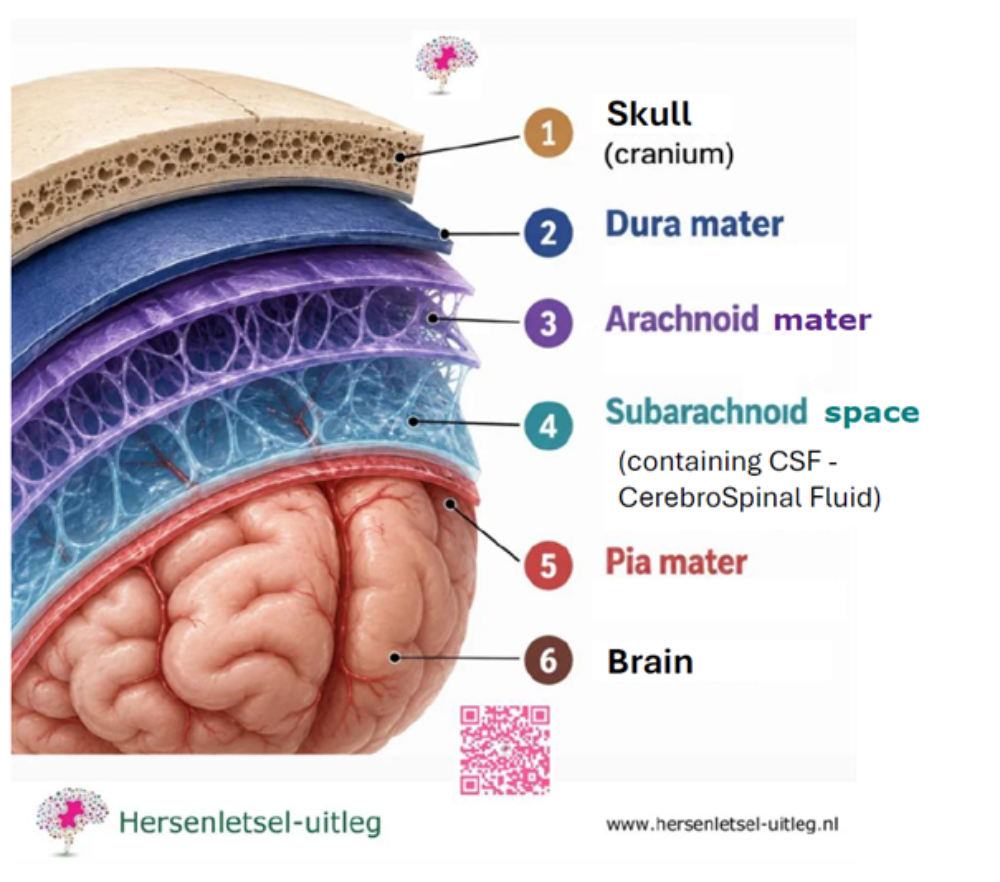
The meninges consist of three protective layers that envelop the brain and the spinal cord.
These layers are: dura mater (hard mater), arachnoid mater and pia mater.
- The dura mater is the outer layer and is firm and thick. This helps protect the brain from damage.
- The arachnoid mater is the middle layer and looks like a web.
- The pia mater is the inner layer and is thin and fragile. This layer closely follows the contours of the brain and spinal cord and provides a supply of blood vessels that are important for nourishing the nerve tissue.
Between the arachnoid mater and the pia mater lies the subarachnoid space, which is filled with cerebrospinal fluid. This fluid protects the brain from shocks and helps remove waste products.
Together, the meninges provide a safe and stable environment for the brain. They protect against infections and support the functioning of the central nervous system.
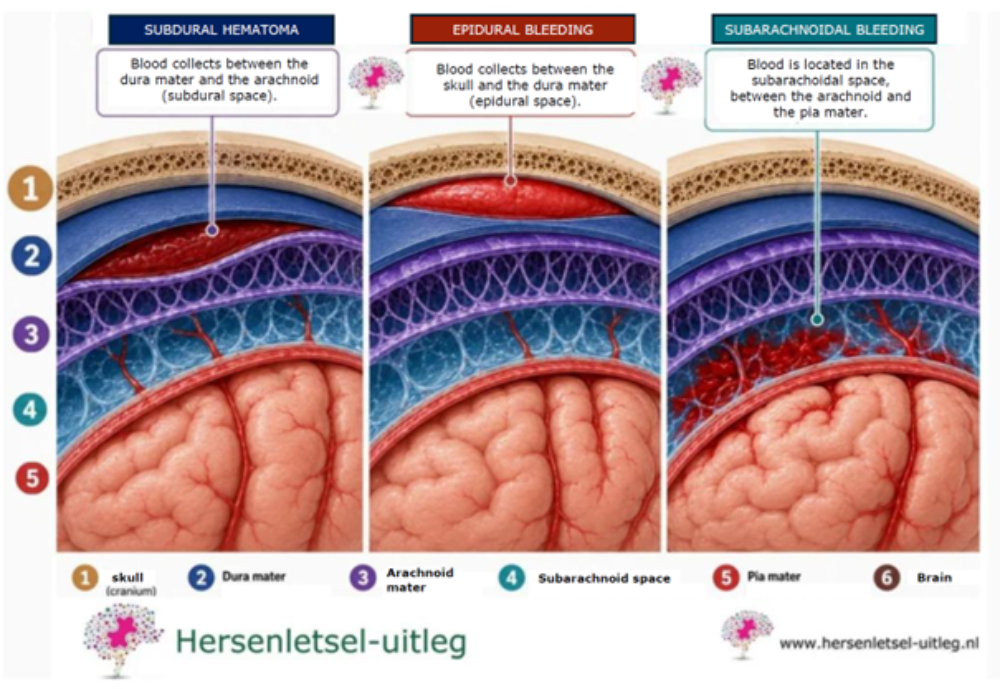
Between the meninges are important spaces that have different functions. The space between the dura mater and the arachnoid membrane is called the subdural space. This space can fill with fluid or blood if there is an injury.
Beneath the arachnoid membrane lies the subarachnoid space, which is filled with cerebrospinal fluid. This fluid is very important because it protects the brain, provides nutrients, and removes waste products. A hemorrhage may also occur there.
Hemorrhages
When a blood vessel is damaged by trauma or other causes, blood can leak into this space, which
leads to pressure on the brain.
This can cause severe symptoms, such as headache, confusion, nausea, and even loss of consciousness.
The different types of meningeal hemorrhages are shown in the image below.
For more information, go to the specific page for that hemorrhage:
advertisements are not ours